
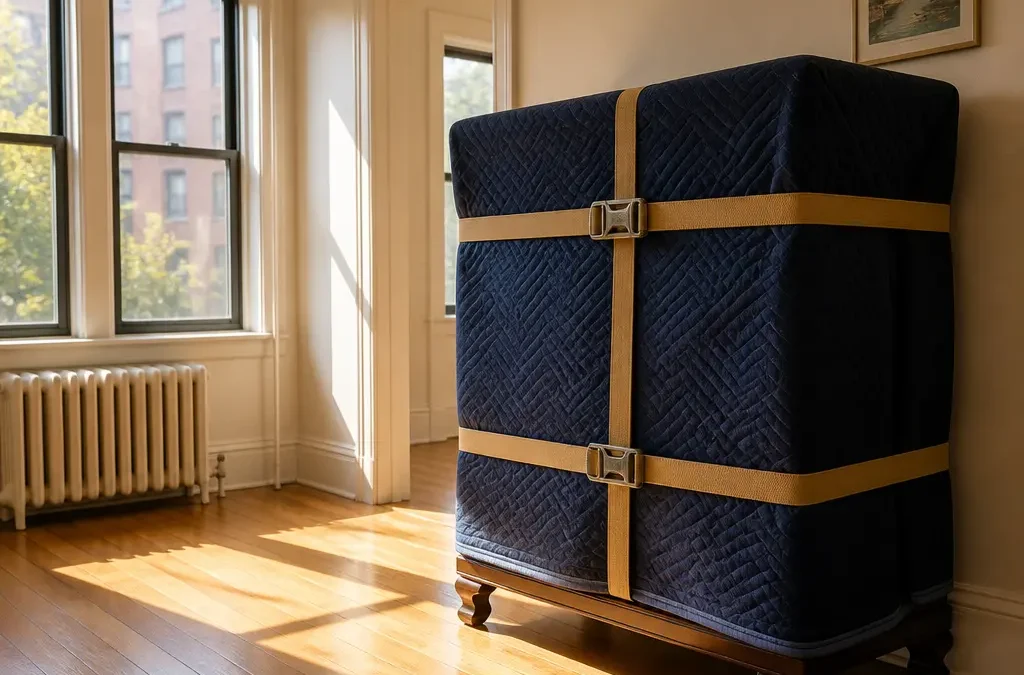
Protective packing is the method used to shield a piece of furniture, fixtures, and equipment (FF&E) from damage during transport and warehousing, matched to what that specific piece is most likely to be harmed by. The three most common methods, blanket wrap, crating, and palletizing, are not interchangeable, and using the wrong one either leaves a piece exposed or wastes money on protection it does not need. This guide explains what each method is, when it fits, and how to match the right protection to each category of FF&E on a design project.
Why One Method Does Not Fit Everything
Different pieces fail in different ways, so they need different protection. A leather sofa is threatened by surface scuffs and moisture; a marble tabletop is threatened by cracking under point impact; a carton of table lamps is threatened by crushing. No single wrapping method addresses all three, because each hazard calls for a different response.
This is why matching matters. Over-protecting a simple, durable piece with a custom crate wastes material, labor, and money on risk that was never there. Under-protecting a fragile or irreplaceable piece with a blanket alone invites exactly the damage that a crate would have prevented. The goal is not maximum protection on everything; it is correct protection on each thing. Getting that match right is what keeps a project both safe and on budget, and it starts with understanding what each method actually does.
Blanket Wrap: The Standard for Sturdy Furniture
Blanket wrap is the method of padding a piece in moving blankets, secured with stretch wrap or bands, to guard against surface damage during handling and transit. It is the workhorse protection for the majority of standard furniture: sofas, upholstered chairs, case goods, dressers, and tables that are sturdy enough to travel without a rigid shell.
Its strength is surface protection with speed and low cost. Blankets absorb the scuffs, scratches, and rubs that furniture picks up in handling, and they wrap and unwrap quickly, which matters when a crew is protecting an entire order. The layer against a delicate finish is chosen for that finish, soft and non-abrasive, so a high-gloss or hand-applied surface is not marked by the very material meant to protect it. Blanket wrap is not, however, structural: it does not stop a piece from being crushed under weight or cracked by a hard impact. For durable furniture that simply needs its surfaces guarded, it is the right and efficient choice. For anything fragile or stackable-upon, it is only the first layer.
Crating: Rigid Protection for the Fragile and Irreplaceable
Crating is the method of building a rigid wooden enclosure around a piece, often with custom foam inside, to protect it from impact, pressure, and crushing. It is the highest level of protection, reserved for pieces that are fragile, high-value, oddly shaped, or simply irreplaceable, where a blanket alone would not be enough.
The candidates are specific. Glass and stone tops, mirrors, chandeliers and light fixtures, artwork, and delicate one-of-a-kind pieces all earn a crate, because each can be destroyed by a single impact that a rigid shell would absorb. The crate holds the piece immobile, spaces it away from its own edges, and lets other items be stacked around it without touching it. Crating costs the most in material and labor and adds the most transit weight, which is exactly why it is matched to the pieces where that cost is justified. A custom crate for a marble console is money well spent; the same crate for a plywood nightstand is money wasted. Reserve it for what genuinely cannot be replaced or repaired.
Palletizing: Consolidating Boxed and Bulk Goods
Palletizing is the method of stacking and securing multiple boxed or small items on a pallet, banded and shrink-wrapped into a single unit for stable handling. It is not really about protecting one delicate piece; it is about moving many smaller ones safely and efficiently together.
Its fit is quantity. Cartons of lamps, accessories, hardware, linens, and other boxed goods travel best consolidated onto a pallet, where they can be moved by forklift as one secure block rather than handled box by box. Palletizing reduces loose-item loss, keeps a project’s smaller goods grouped together, and speeds loading and receiving. The boxes still need appropriate internal packing, because a pallet stabilizes the stack but does not cushion what is inside each carton. Palletizing and blanket wrap or crating are therefore not rivals; the small boxed items get palletized while the large or fragile pieces get wrapped or crated, and a well-run order uses all three in their proper places.
Matching Method to FF&E Category
Put together, the three methods map cleanly onto the categories of a typical FF&E order. Sturdy furniture, the sofas, chairs, tables, and case goods, takes blanket wrap. Fragile and high-value pieces, glass, stone, mirrors, lighting, and art, take crating. Boxed and bulk small goods, lamps, accessories, and hardware, take palletizing.
The judgment calls sit at the edges, and they come down to fragility and value. A standard wood console blanket-wraps; the same console with a glass top or a rare veneer moves up to a crate. A single accessory box travels fine on its own; forty of them palletize. This is exactly the assessment a professional crew makes when it receives an order through a receiving warehouse, sorting each piece to its right protection at intake rather than treating a whole shipment the same way. The category is the starting point; the specific piece’s fragility and value make the final call.
Protection Is a Cost Decision, Too
Every protection choice is also a budget choice, and the right match optimizes both safety and spend. Blanket wrap is fastest and cheapest, palletizing is efficient at volume, and crating is the most expensive by a wide margin in material, labor, and added weight.
Spending well means putting the expensive protection only where the risk earns it. A project that crates everything is safe but over budget; a project that blankets everything is cheap until the first cracked mirror erases the savings and then some. The correct match, crate the irreplaceable, wrap the sturdy, palletize the bulk, is the one that spends exactly enough on each piece and no more. This is where an experienced crew adds value beyond the labor itself: knowing which pieces genuinely need the crate is what protects both the furniture and the budget. When the order is unwrapped, the white-glove movers install pieces that arrived exactly as they left.
A Protection Checklist for Your Next Order
To match each piece to the right method:
- Blanket wrap sturdy furniture: sofas, upholstered chairs, case goods, and standard tables.
- Crate the fragile and irreplaceable: glass, stone, mirrors, chandeliers, lighting, and art.
- Palletize boxed and bulk goods: lamps, accessories, hardware, and linens.
- Match the first wrap layer to the finish, so protection never marks the surface.
- Move a piece up a level when a glass top, stone, or rare finish raises its fragility.
- Keep internal packing in palletized cartons; a pallet stabilizes but does not cushion.
- Reserve crating for pieces where the cost is justified by value or irreplaceability.
- Let the receiving team sort each piece to its protection at intake, not the whole shipment alike.
Blanket wrap, crating, and palletizing are not competing options but a set of tools, each right for a category and wrong for the others. Matching the method to the piece is what keeps an FF&E order both fully protected and sensibly priced. As part of its interior design logistics program, Emerald Moving & Storage assesses and protects every piece to its category at intake, so each item travels in exactly the protection it needs.