
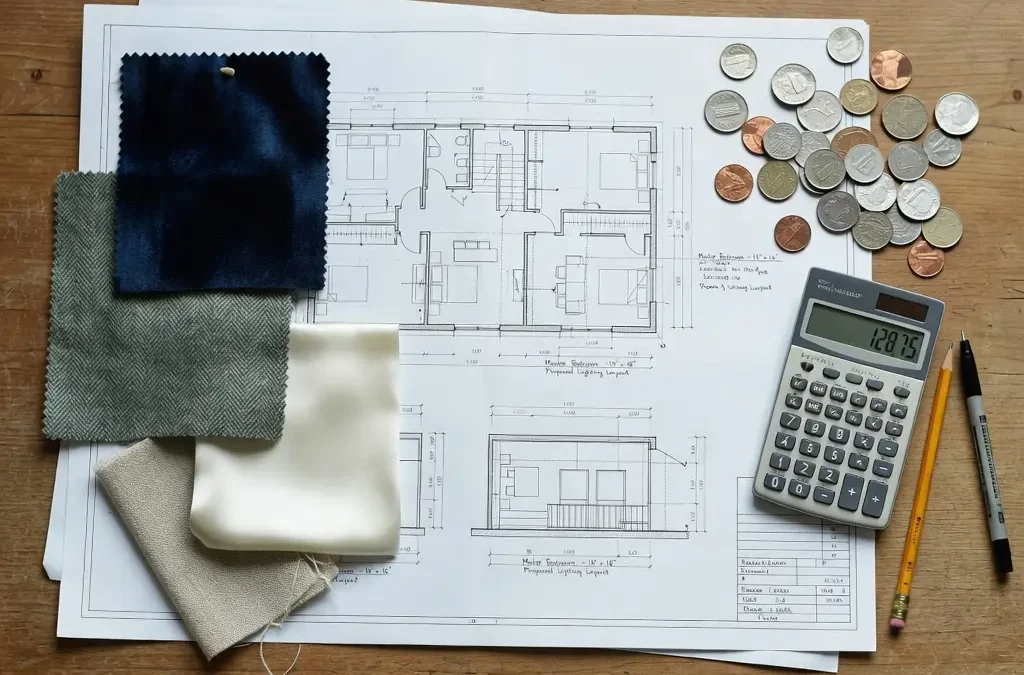
A budget overrun is the gap between what a designer quoted a client and what the project actually cost to complete. On most interior design projects, that gap does not come from the furniture line items, which are fixed at purchase order. It comes from the logistics around them: the storage fees, redelivery charges, rush freight, and rebooked crews that never appear on the original spec but land squarely on the final invoice. This guide breaks down where late delivery and poor logistics quietly inflate a budget, and how a designer keeps those costs off the books.
The Quoted Budget Versus the Real Budget
The quoted budget is clean: furniture, fixtures, freight, install, and a margin. The real budget is what happens when reality intrudes on that plan. A single piece arrives six weeks late, and the tidy freight-and-install line quietly splits into storage, redelivery, a second install trip, and a client concession to smooth over the delay.
These costs are hidden because they are not in the quote. No designer writes a line for a rebooked crew or a month of unplanned storage, yet those are exactly the charges a delayed or poorly coordinated project generates. The overrun is not a pricing error; it is a logistics failure that arrives as a bill. Understanding where each hidden cost comes from is the first step to designing it out of the project.
Hidden Cost: Storage and Double-Handling
When furniture arrives before the space is ready, it has to go somewhere, and somewhere always costs money. Pieces delivered early to a designer’s own space, a client’s garage, or a short-term unit accrue storage fees and, worse, get handled more than once. Every extra touch is a labor charge and a damage risk.
Double-handling is the silent budget killer. A sofa received at one location, moved to storage, then moved again to the install site is paid for three times over in labor, and each move is a fresh chance for a scuff or tear. Routing everything to a single receiving warehouse collapses those touches into one: items arrive, get inspected, sit in climate-controlled warehousing, and move once more to the site. One handling fee replaces three.
Hidden Cost: Rush Freight and Expedite Fees
When a project runs behind, the instinct is to buy back time with money, and freight is where that money goes fastest. A late piece on the critical path tempts a designer into expedited shipping, air freight, or a dedicated truck, each carrying a premium that can dwarf the item’s own freight cost.
These fees are a tax on poor buffering. A dining table that could have shipped standard for a modest cost becomes an expedite charge several times higher because the order went out late or the timeline left no margin. Rush freight occasionally rescues a reveal date, but as a routine it signals a schedule that was never realistic. The cheapest freight is the freight booked early against a timeline built with slack.
The premium compounds when several pieces slip at once. A single expedited item is a manageable line; a whole room’s worth of expedites, each booked in a panic in the final week, can quietly consume an entire project’s margin. The designer rarely sees the total until the freight invoices arrive together after the reveal, by which point the overrun is already locked in. Freight is a cost that is cheap to plan and expensive to fix.
Hidden Cost: Rebooked Crews and Partial Installs
Install crews are booked in advance, and a missing piece on install day turns one clean visit into two expensive ones. If the project is not complete when the crew arrives, the designer either pays for an idle day or pays a second time for a return trip to finish.
A partial install is the costliest outcome of all. The crew places what is on hand, leaves gaps for the missing items, and returns later to finish, so a single install is billed twice. Freight elevators and loading docks reserved for the original date may need rebooking too, sometimes at a premium and weeks out. Consolidating the work with white-glove movers into one complete install, staged only after every piece is confirmed on hand, removes the return trip entirely.
Hidden Cost: Late-Discovered Damage
Damage is expensive in proportion to how late it is found. A defect caught on arrival at a warehouse triggers a replacement order with weeks to spare. The same defect caught on install day, in front of the client, triggers a scramble: rush reorder, expedite freight, a return install trip, and a delayed reveal all at once.
This is why inspection timing is a budget decision, not just a quality one. Early inspection converts a damaged piece into a routine replacement; late inspection converts it into a stacked emergency that pulls in every other hidden cost on this list. A receiving warehouse that inspects and documents each item on arrival is the difference between a quiet reorder and a client-facing crisis.
Hidden Cost: Client Concessions and Margin Erosion
The most damaging overrun never appears on a vendor invoice at all. When a project runs late, the designer often absorbs the cost to protect the relationship: a discounted fee, a comped upgrade, or a written-off charge that quietly erases the project’s margin.
These concessions are the real price of a missed reveal date. A delay the client experiences as broken trust gets repaired with money, and that money comes out of the designer’s profit, not the furniture budget. The logistics failures above do not just inflate costs; they convert a profitable project into a break-even one, and a referral into a complaint. Controlling logistics is, in the end, margin protection.
There is a reputational cost layered on top of the financial one. A client who remembers a project as late and disorganized does not refer the designer, however beautiful the finished room. The lost referral is a future project that never happens, a cost that never appears on any invoice yet outweighs every storage fee and expedite charge combined. Clean logistics protects the next commission as much as the current margin.
A Cost-Control Checklist for Your Next Project
Before the first purchase order goes out, protect the budget with these steps:
- Route every shipment to one receiving warehouse to eliminate double-handling.
- Book freight early against a timeline with real slack, so rush fees stay off the invoice.
- Stage the full order and confirm every piece on hand before scheduling the install.
- Consolidate into one complete install visit to avoid return-trip charges.
- Inspect and document each item on arrival, so damage surfaces weeks before the reveal.
- Reserve docks and freight elevators once, against a realistic date.
- Track the logistics budget as its own line, separate from furniture cost.
- Set the client’s timeline expectation early, so no concession is needed later.
A budget overrun is rarely a mispriced sofa. It is the accumulation of storage, redelivery, rush freight, rebooked crews, and quiet concessions that a broken logistics chain generates. As part of its interior design logistics program, Emerald Moving & Storage receives, inspects, warehouses, and installs FF&E in one coordinated chain, so the budget a designer quotes is the budget the project comes in at.