
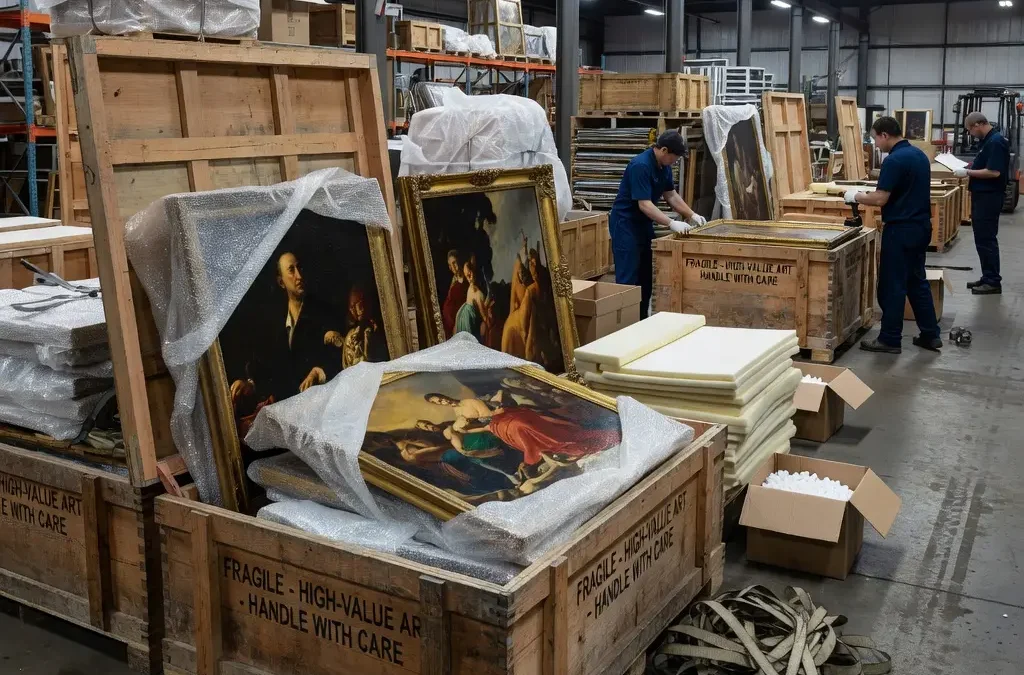
High-value art relocation is a specialized moving service that combines insurance coordination, climate-controlled transport, and preservation-grade handling to move valuable artwork safely. Whether you’re relocating a private collection, gallery inventory, or museum pieces, the logistics differ fundamentally from standard furniture moving. This guide walks you through the insurance requirements, climate considerations, and handling protocols that protect artwork worth tens of thousands—or millions—of dollars.
The Insurance Foundation: Documentation and Coverage Limits
Before any artwork leaves the premises, insurance begins with accurate appraisals and comprehensive documentation. Most standard moving insurance covers only $2.50 per pound per article—wholly insufficient for art valued at thousands per piece.
You need two layers of protection. First, commission a formal appraisal by a qualified fine-arts appraiser for each piece or the entire collection. This appraisal becomes the baseline for declared value and insurance claims. Second, coordinate with your insurer to issue a Certificate of Insurance (COI) specifically naming the artwork and the relocation date. The COI transfers coverage during the move window.
Many collectors maintain fine-arts insurance policies year-round; relocations require a rider amendment that increases coverage limits during transit and temporary storage. Work with your insurer to clarify coverage for in-transit damage, temporary warehousing, and installation at the destination. Emerald’s crew documents every piece with photographs and condition reports before packing, creating a baseline for any claims.
Climate Control: Temperature and Humidity as Critical Variables
Artwork deteriorates rapidly in uncontrolled environments. Oil paintings, sculptures, textiles, photographs, and framed prints all respond to temperature and humidity fluctuations. A 10-degree swing or sudden humidity spike can cause warping, cracking, mold, and permanent loss of value.
Professional art relocation requires climate-controlled vehicles and storage. Standard moving trucks—uninsulated, subject to external temperatures—expose art to dangerous swings. Emerald’s climate-controlled warehouse maintains 65–75°F and 40–55% relative humidity year-round, protecting pieces during interim storage. If your move spans months or your new space isn’t ready, this stable environment becomes essential.
Before moving, identify the climate specifications for each piece. Oils and acrylics tolerate 50–75°F; watercolors and textiles demand 45–55°F. Sculptures of wood or stone are sensitive to humidity spikes above 60% or drops below 35%. High-end movers invest in hygrometers and thermometers aboard transport vehicles, recording conditions throughout transit. Any deviation triggers an insurance report and damage documentation.
Specialized Packing: Wrapping and Crating for Preservation
Wrapping high-value art is not the same as wrapping furniture. Standard bubble wrap traps moisture and acidity against the surface; acid-free archival tissue must touch the artwork first. Paintings require glassine (a non-adhesive, moisture-resistant paper) covering the frame, then multiple layers of moving blankets. Sculptures demand custom crating with shock-absorbing foam that does not off-gas or break down into the piece.
Every wrap protects two ways: physically and chemically. Acid-free materials prevent chemical degradation over weeks in transit. Padding absorbs vibration from the truck. Air pockets between layers allow climate regulation and prevent condensation. Emerald’s crew receives specialized training in art packing; they distinguish between pieces requiring hard-shell crates versus soft wrapping, and they know which materials never touch which artwork. Professional packing services pair the right materials with technique specific to each medium.
Framed prints and photographs require individual compartments, never stacked. Oversized canvases roll only if the artist specifies; most modern and contemporary paintings must lay flat on custom-built art racks. Delicate sculptures are individually crated with custom foam inserts that match their contours. This level of detail extends packing time and cost but is non-negotiable for pieces exceeding five figures.
Transportation and Handling Protocols
The crew that transports high-value art differs from standard moving labor. Fine-arts movers are trained in conservation principles, understand artwork terminology, and carry liability insurance specific to high-value transport. This is the domain of white-glove movers, who know that swinging a painting into a doorway or leaning a sculpture against a wall mid-transit can erase years of careful packing.
Art-specialist crews follow route planning that minimizes bumps, avoids highway construction, and accounts for weather. They do not stack items on top of artwork. They use specialized equipment: hydraulic lifts for heavy sculptures, art dollies with felt pads instead of standard forklifts, and tie-down systems that secure pieces without applying pressure to vulnerable edges.
During transport, pieces remain in climate-controlled vehicles. Stops are minimized. Temperature logs are kept. Upon arrival, artwork is unloaded first—not after furniture and boxes. Professional install means positioning each piece on walls or pedestals using conservation-grade hardware and mounts, often with input from the original curator or artist.
Pre-Move Assessment: The Preventive Step
Before scheduling any high-value art move, commission a site survey. A conservator or senior mover evaluates the collection, photographs each piece, records dimensions, assesses frame condition, and flags fragility concerns. This assessment informs packing strategy, transportation method, and insurance coverage.
The survey also identifies travel risks: narrow stairwells, low doorways, long hallways that require horizontal handling, outdoor climates en route (important for long-distance moves). Emerald’s assessors check destination conditions too—new humidity levels, light exposure, wall stability—so artwork acclimates properly and hangs safely in its new location.
This step adds time and cost upfront but prevents catastrophic mistakes. A painting that cannot physically fit through a doorway without removal from its frame is discovered before moving day, not during.
Interim Storage: Warehousing Between Moves
Many collectors and galleries face gaps between selling one property and closing on another. Temporary storage of high-value art demands the same climate control and security as permanent installation. Standard self-storage units fluctuate 30–40 degrees seasonally and lack environmental monitoring.
Emerald’s 24,000 square-foot climate-controlled receiving warehouse in Panama City Beach provides secure interim storage with humidity and temperature monitoring, including in-house art hanging and repair. Artwork remains wrapped and crated, protected from dust and light degradation. If you require storage for weeks or months during relocation, document the full time span in your insurance rider so coverage extends through the warehouse phase.
Final Checklist: Protecting Your Collection
Before any high-value art move, verify these steps:
- Obtain formal appraisals for all pieces exceeding $5,000.
- Amend or secure fine-arts insurance with a rider covering transit and temporary storage.
- Commission a pre-move conservator assessment or mover survey.
- Photograph and document condition of every piece before packing.
- Confirm climate specifications for your collection type (oils, textiles, sculpture, etc.).
- Hire a crew trained and insured specifically for fine-arts transport, not standard movers.
- Arrange climate-controlled vehicle and storage, not standard transit or facilities.
- Keep appraisals, insurance documents, and condition reports on file for five years post-move.
High-value art relocation is an investment in preservation, not convenience. The cost of specialized handling, climate control, and insurance oversight is negligible against the cost of a damaged masterpiece. As part of its interior design logistics program, Emerald Moving & Storage coordinates every layer—insurance, packing, transport, and install—so your collection arrives perfect.