
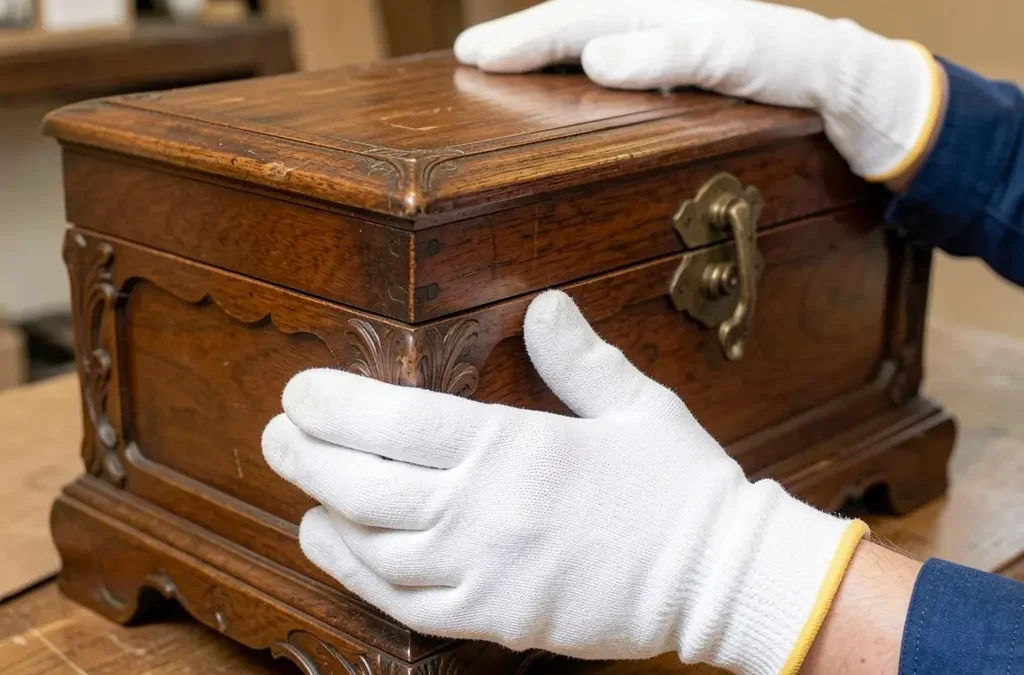
White glove moving is a specialized furniture delivery and installation service in which trained crews handle, transport, climate-control, and place high-value pieces according to a designer’s specifications. For interior designers working on luxury residential and hospitality projects, the question of whether white glove moving is worth the premium is functionally a question about risk allocation. The premium covers prevention. The alternative covers consequences. The decision is rarely about the line item on the invoice — it is about which costs the project absorbs when something goes wrong, and how those costs compare to the price of doing it right the first time.
The argument against white glove service usually rests on the visible cost: a higher hourly rate, a higher per-piece rate, or a higher project total than a standard freight or residential moving quote. The argument for it rests on a different category of costs entirely — the ones that do not appear on any quote and only become visible after the damage is done. This article examines both categories and explains why, on any project with custom furniture, designer-specified finishes, or a tight installation schedule, the math consistently favors specialized Interior Design Logistics over the alternatives.
What Interior Designers Are Actually Paying For
The Service Components Inside a White Glove Quote
A white glove quote includes a defined set of operational components that a standard moving quote does not. Pieces are wrapped in protective pads sized to the silhouette of each object rather than generic blanket coverage. Transit is performed in climate-controlled trucks with E-track securement at multiple anchor points. Holding periods occur in climate-controlled storage calibrated to the destination’s humidity range. Installation is executed against a documented design plan with floor protection, corner guards, and pre-measured pathways. The crew is trained to handle lacquered surfaces, stone, glass, leather, and high-end upholstery without leaving fingerprints, dents, or scuffs. Debris is removed at the end of the install. The room is photograph-ready when the truck departs.
Why the Quote Looks Higher Than a Standard Mover’s Quote
The price difference between a white glove quote and a standard moving quote reflects the difference in inputs. A standard mover prices based on cubic footage, truck time, and crew hours. A white glove operation prices based on the same variables plus the cost of climate-controlled equipment, specialized packing materials, longer per-piece handling times, design plan coordination, and crew training. The hourly rate is higher because the crew is doing more per hour and is qualified to do it. The per-piece cost is higher because each piece receives an operational protocol rather than a generic handle-and-haul.
The Real Cost of Cutting Corners on Furniture Delivery
Damage to Furniture
The first cost of cutting corners is the most direct: damaged furniture. A torn upholstery panel on a custom sectional means a replacement order with a lead time measured in months. A cracked stone top on a dining table is rarely repairable to a designer-acceptable standard. A scratched lacquer finish on a console requires either full refinishing or replacement. The replacement cost is one component. The schedule cost is another — the client moves in without the piece, the room photographs incomplete, and the project closes with an open loop. For a piece valued at $8,000, a 15% damage rate over a project of forty pieces represents $48,000 in exposed value. A white glove premium of $3,000 to $5,000 across the same project is a fraction of that exposure.
Damage to the Property
The second cost is damage to the property itself. A scuff on a freshly sealed white oak floor is not a touch-up — it is a refinishing line item that displaces the client and adds days to the schedule. A dent in a plaster wall behind a piece of casegoods requires the plasterer to return. A scratch on the interior of an elevator cab in a high-rise condominium results in a charge from the HOA. These are not theoretical costs. They appear on closeout punch lists with predictable frequency on any project where the delivery crew was not equipped to protect the home during the move-in.
Schedule Slippage
The third cost is schedule. A coastal hospitality project with a seasonal opening date does not have flexibility in its installation window. A residential project with a client move-in coordinated against a school calendar or a closing date does not either. When a delivery goes wrong — wrong pieces in wrong rooms, damaged items requiring reorder, trades displaced by a chaotic install — the entire project schedule absorbs the delay. The client’s general contractor charges for extended supervision. The designer’s hourly time on corrections is unbilled or absorbed. The hospitality operator loses rental nights. The math on a single delayed week is almost always larger than the entire white glove premium for the project.
Damage to the Designer’s Reputation
The fourth cost is the hardest to quantify and the most consequential over time. Clients do not separate the designer’s work from the delivery crew’s work. A console placed an inch too far from the wall reads as the designer’s failure. A scratched threshold reads as the designer’s oversight. A piece of art hung at the wrong height reads as the designer’s mistake. The client sees one project, one timeline, and one set of outcomes, and the designer is the name attached to all of it. On a referral-driven business, a single project where the delivery undermined the design work can cost more in future revenue than any line item on any invoice. Specialized White Glove Service is, in this sense, an investment in the designer’s own reputation rather than just a service the client is paying for.
Insurance and Liability Exposure
The fifth cost is insurance and liability. Standard movers carry liability coverage calculated at a default rate — frequently sixty cents per pound — which does not approach the actual value of custom furniture or designer-specified pieces. A $12,000 upholstered headboard weighing eighty pounds is insured at $48 under that default. The recovery process for damage exceeding that coverage involves disputed claims, sub-rogation against the manufacturer, and uncomfortable conversations with the client about who pays the difference. White glove operations carry valuation coverage written against the actual value of the cargo, with claims processes structured for high-value pieces. The premium difference includes this coverage difference, and on a project with significant value at stake, the coverage alone justifies the spend.
When White Glove Service Pays for Itself
Projects Where the Premium Is Clearly Justified
White glove service pays for itself most clearly on projects with one or more of the following characteristics: custom furniture orders with long lead times, designer-specified finishes that cannot be touched up on site, tight installation windows tied to client move-in or hospitality opening dates, multiple trades sequenced through the same space, climate-sensitive materials including solid wood and natural upholstery, and a client expectation of photograph-ready completion. Any single one of these characteristics raises the cost of a delivery failure above the cost of the premium. Two or more of them in the same project make the comparison decisive.
Projects Where a Standard Mover May Suffice
White glove service is not always the right answer. A standard mover may be appropriate for projects involving production furniture from accessible vendors, no climate-sensitive materials, no schedule pressure, no documented design plan, and a client who is not paying for installation-grade outcomes. These projects exist, and the white glove premium is not justified on them. The decision is not a default in either direction — it is a function of what is at stake.
How the Math Works on a Representative Project
Consider a residential installation with forty pieces of designer-specified furniture, a total furniture value of $320,000, a two-day installation window, and a client move-in scheduled for the following weekend. A standard moving quote for the project might come in at $4,500. A white glove quote for the same project might come in at $9,500. The difference is $5,000. If the standard mover damages two pieces at an average value of $6,000 each, the replacement cost alone is $12,000, before accounting for reorder lead times, schedule slippage, and the designer’s time managing the recovery. If the standard mover scratches a hardwood floor during the move-in, the refinishing cost in that room alone is likely to exceed $3,000. If the schedule slips by three days because pieces arrived in the wrong rooms and required redistribution, the cascading cost across trades, supervision, and client accommodations is harder to bound but rarely less than $5,000. The premium pays for itself before the first piece of damage is fully accounted for.
The Underlying Question
The question of whether white glove moving is worth it for interior designers is, at its core, a question about whether the designer wants the delivery process to be a source of risk or a source of reliability. A delivery that goes well is invisible — the client never knows how close the project came to a problem because the problem never happened. A delivery that goes wrong is highly visible and difficult to recover from. For designers working on projects where the finished space matters, the schedule matters, and the client relationship matters, the case for specialized Interior Design Logistics is not a matter of preference. It is a matter of which costs the project is structured to absorb, and which costs are not worth the savings on the front end. The premium is the lower-risk side of the trade. The corners cut on the front end almost always reappear as costs on the back end, and they reappear larger.