
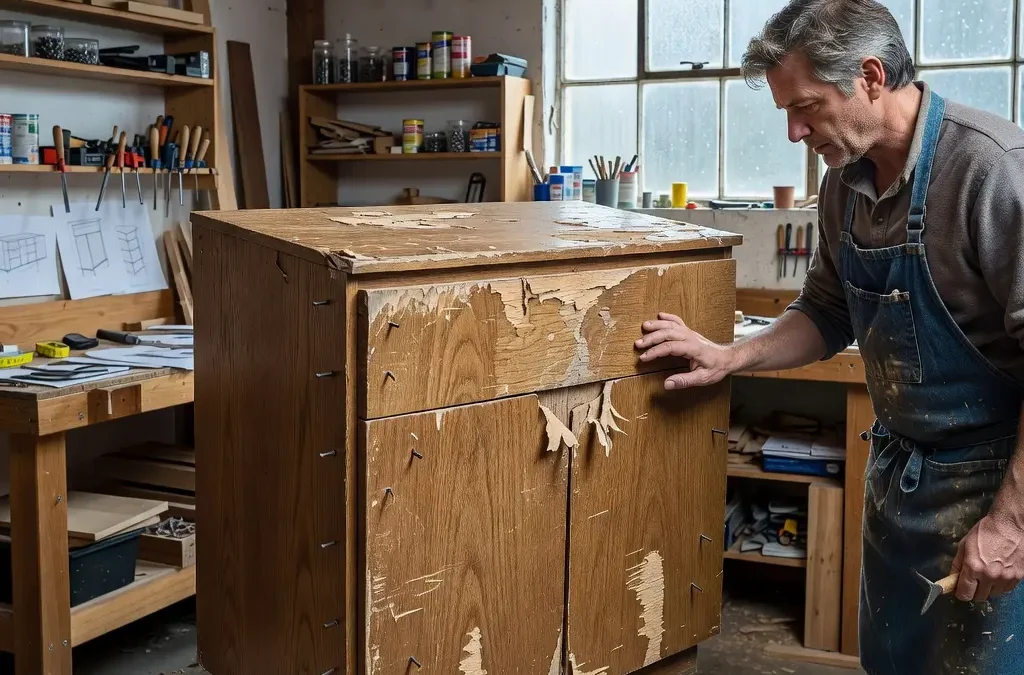
Damaged furniture is an operational reality of every interior design project, no matter how well the logistics are managed. Custom pieces travel long distances, pass through multiple freight carriers, and are handled by people the designer never meets. Even a flawless white glove operation will occasionally receive a piece that left the workroom with a defect or picked up damage somewhere in transit. The question is never whether a piece will eventually arrive damaged — it is whether the designer has a process for handling it cleanly when it does. A designer with a defined response protects the schedule, the budget, the client relationship, and their own standing. A designer without one absorbs the chaos personally.
This guide lays out the step-by-step response for handling a damaged piece, from the moment damage is discovered through to resolution. The single most important factor running through every step is timing: the earlier damage is caught and documented, the more options remain open. This is the core argument for a receiving and inspection process within professional Interior Design Logistics — damage caught at the warehouse weeks before install day is a manageable problem, while damage discovered in front of the client on install day is a crisis.
Step One: Stop and Document Before Anything Else
The instinct when a piece arrives damaged is to assess whether it can be used, fixed, or worked around. Resist that instinct until the damage is fully documented. Documentation is the foundation of every subsequent step, and it cannot be reconstructed after the fact.
Photograph the Damage and the Packaging
Photograph the damaged piece from multiple angles, in good light, with detail shots of the specific damage and wider shots showing the whole piece. Critically, photograph the packaging as well — the crate, the blanket wrap, the box, and any visible impact damage to the exterior. Packaging photographs establish whether the damage occurred in transit, and they are often the deciding evidence in a freight claim. If the packaging shows a puncture or crush damage that aligns with the damage to the piece, the claim against the carrier is straightforward.
Record the Details While They Are Fresh
Note the date and time of arrival, the carrier, the condition of the packaging on arrival, who received the piece, and a written description of the damage. This record, paired with the photographs, forms the documentation package that drives the claim and the reorder conversation. The more complete it is, the faster everything downstream moves.
Step Two: Determine Where the Damage Occurred
The resolution path depends entirely on where the damage originated, because that determines who is responsible for the remedy. Establishing the source early prevents the damage from becoming a dispute in which every party points at another.
Distinguish Manufacturing Defects From Transit Damage
Some damage is a manufacturing defect — a flaw in the finish, a misaligned joint, an upholstery seam that failed. Some is transit damage — a crushed corner, a tear, a crack consistent with impact. The distinction matters because a manufacturing defect is the vendor’s responsibility while transit damage is the carrier’s, and the claim goes to a different party in each case. The documentation from step one, especially the packaging photographs, is what allows this determination to be made with confidence rather than guesswork.
Identify the Responsible Party and the Claim Window
Once the source is established, identify who the claim goes to and what the claim window is. Freight carriers and manufacturers both operate on deadlines for filing damage claims, and those deadlines can be short. A claim filed late is a claim denied, regardless of merit. This is another reason early discovery matters: a piece inspected at the receiving warehouse on arrival leaves the full claim window open, while a piece discovered damaged on install day may have already burned most of it.
Step Three: File the Claim Properly
With documentation in hand and the responsible party identified, the claim itself is largely a matter of following the process correctly and completely. A well-documented claim filed on time resolves; a vague or late one stalls.
Submit a Complete Claim Package
File the claim with the photographs, the written description, the order documentation, and the value of the piece. A complete package filed once moves faster than a partial package that triggers repeated requests for more information. Include everything the responsible party will need to approve the claim without coming back with questions.
Understand the Coverage That Applies
The recovery depends on the coverage in place. A standard freight carrier’s default liability is calculated by weight and rarely approaches the value of a custom piece, which means a piece moved under default coverage may recover only a fraction of its value. A piece moved under valuation coverage written for high-value cargo recovers its actual value. This is one of the practical reasons the choice of logistics partner matters before anything is ever shipped — the coverage structure determines what recovery is even possible when damage occurs.
Step Four: Manage the Reorder and the Schedule
The claim addresses the financial side. The schedule is a separate problem, and often the more urgent one, because a damaged piece means a gap in the install and a lead time to fill it.
Initiate the Reorder Immediately
Do not wait for the claim to resolve before initiating the reorder if the schedule cannot absorb the delay. The claim and the reorder are separate processes on separate timelines, and sequencing them one after the other often means missing the install window entirely. If the piece has a long lead time, the reorder clock needs to start the moment the decision is made, in parallel with the claim.
Plan the Install Around the Gap
A damaged piece with a long reorder lead time means the install proceeds without it. Plan for this: sequence the install so the affected room can be substantially completed and the missing piece added later, or stage a temporary arrangement that holds until the replacement arrives. The goal is to keep the rest of the project moving rather than letting a single damaged piece stall the whole install. When pieces are consolidated and inspected in advance through proper Moving & Storage, the gap is identified early enough that the install can be planned around it from the start rather than improvised on the day.
Step Five: Communicate With the Client
How the damage is communicated to the client shapes how the client perceives the entire project. Handled well, a damaged piece becomes a non-event the client barely remembers. Handled poorly, it becomes the thing they remember most.
Lead With the Plan, Not the Problem
When a damaged piece affects the timeline, tell the client in terms of the resolution rather than the setback. The message is not “a piece arrived damaged and now we have a problem.” The message is “one piece needs to be replaced, the replacement is already ordered, and here is how the install will proceed in the meantime.” A client who hears a plan stays confident. A client who hears a problem starts to worry about everything else. The damage is far less alarming to a client than the sense that no one is managing it.
Document the Resolution for the Project Record
Once the replacement arrives and is installed, document the completed piece and close the loop in the project record. This keeps the project documentation complete and provides a clean reference if any question arises later about the timeline or the cost. A resolved issue, documented, is simply part of a well-run project.
Prevention Is the Best Response
Every step in this guide becomes easier the earlier the damage is caught, which means the most effective response to damaged furniture happens before install day ever arrives. A receiving and inspection process that unwraps, examines, and documents every piece on arrival at the warehouse catches damage while the full claim window is open, while there is time to reorder, and well before the client is standing in the room. The designer who builds inspection into the logistics — or partners with an operation that has it built in — converts the damaged piece from a potential install-day disaster into a routine problem handled quietly in the background. Damage is inevitable across enough projects. A crisis is not. The difference between the two is entirely a matter of process, and the process is entirely within the designer’s control.